Social Commerce: From Entertainment Content to the Purchase Journey
Social commerce is more than just selling on social media
Social commerce is often understood simply as selling directly on social platforms. However, this definition is somewhat narrow. In reality, social commerce is the process of transforming social interaction into commercial action.
Customers discover products through videos, check comments, watch creator reviews, send direct messages for more information, join livestreams, click on landing pages, or purchase directly within the app. That entire chain constitutes the true social commerce journey.
Why is social commerce growing?
Social media has become a space where users simultaneously entertain themselves, discover new things, and seek social proof. Numerous international reports indicate that social media and “shoppable media” are significantly influencing how consumers discover products and make purchase decisions.
This trend is particularly suited to markets with strong social behaviors like Vietnam, where comments, inboxes, community reviews, and livestreams have a profound impact on buying decisions.
Social commerce needs more than just good content
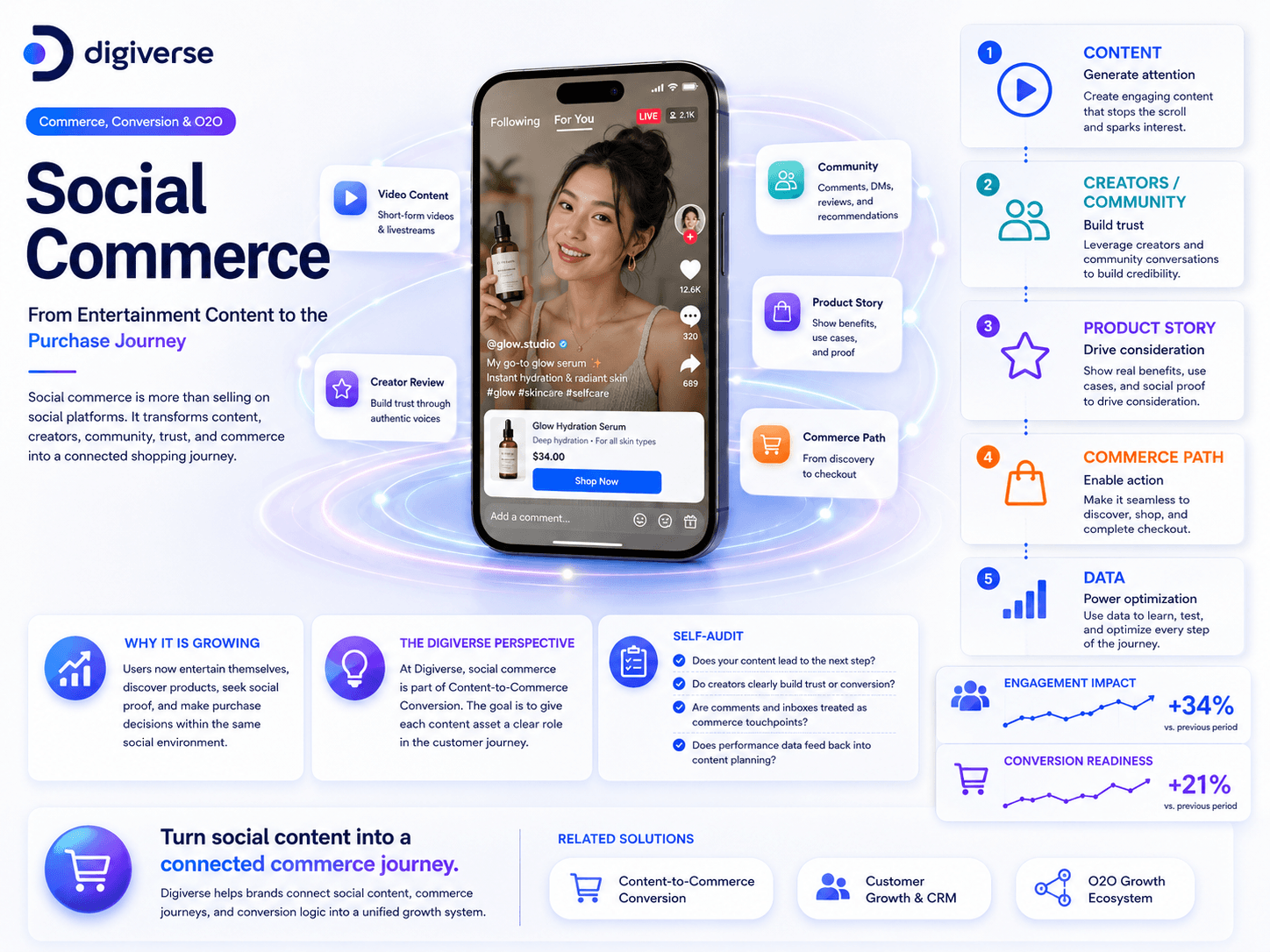
A robust social commerce system requires five layers:
-
Content: To generate attention.
-
Creators/Community: To build trust.
-
Product Story: To drive consideration.
-
Commerce Path: To facilitate action.
-
Data: To enable optimization.
If you only have entertaining content without product discovery, users will watch and move on. If you have purchase links but lack trust, conversion will be weak. If you have orders but cannot measure which content drives performance, the system cannot be optimized.
The Digiverse Perspective
At Digiverse, we view social commerce as a core component of Content-to-Commerce Conversion. The goal is not to turn every post into a sales pitch, but to design a clear, intentional role for every piece of content within the customer’s purchase journey.
Self-Audit Questions
-
Does your social content lead the customer to the next step?
-
Do your creators have a clear role in building trust or driving conversions?
-
Are inboxes and comments managed as active commerce touchpoints?
-
Does your social commerce data flow back into your content planning?