Introduction: Beyond Paid Posting
Creator marketing has become a staple in many communication campaigns. Brands work with KOLs and KOCs, send products to reviewers, book posts, host livestreams, and commission experience videos to spread campaign messages.
However, many businesses still implement creator marketing as a simple transaction to buy reach: they pick someone with a large following, book a specific number of posts, measure views and engagement, and end the campaign once the posts are live. This approach might build awareness, but it does not necessarily build trust or drive conversion.
Creator marketing should not be about simply hiring people to post. It is a strategic effort to borrow the trust, perspective, and community relationships of creators to help customers understand, trust, and act.
Why This Matters
Today’s customers search for social proof before making decisions. They watch reviews, look for authentic experiences, read comments, compare multiple sources, and value experts or peers who reflect their own lifestyles.
Creators create trust precisely because they do not sound like a brand. They speak the community’s language, share personal experiences, and provide context. However, if the creator is poorly matched or the content feels like an overly scripted ad, trust is lost instantly. Effective creator marketing must be designed as a systematic “trust engine.”
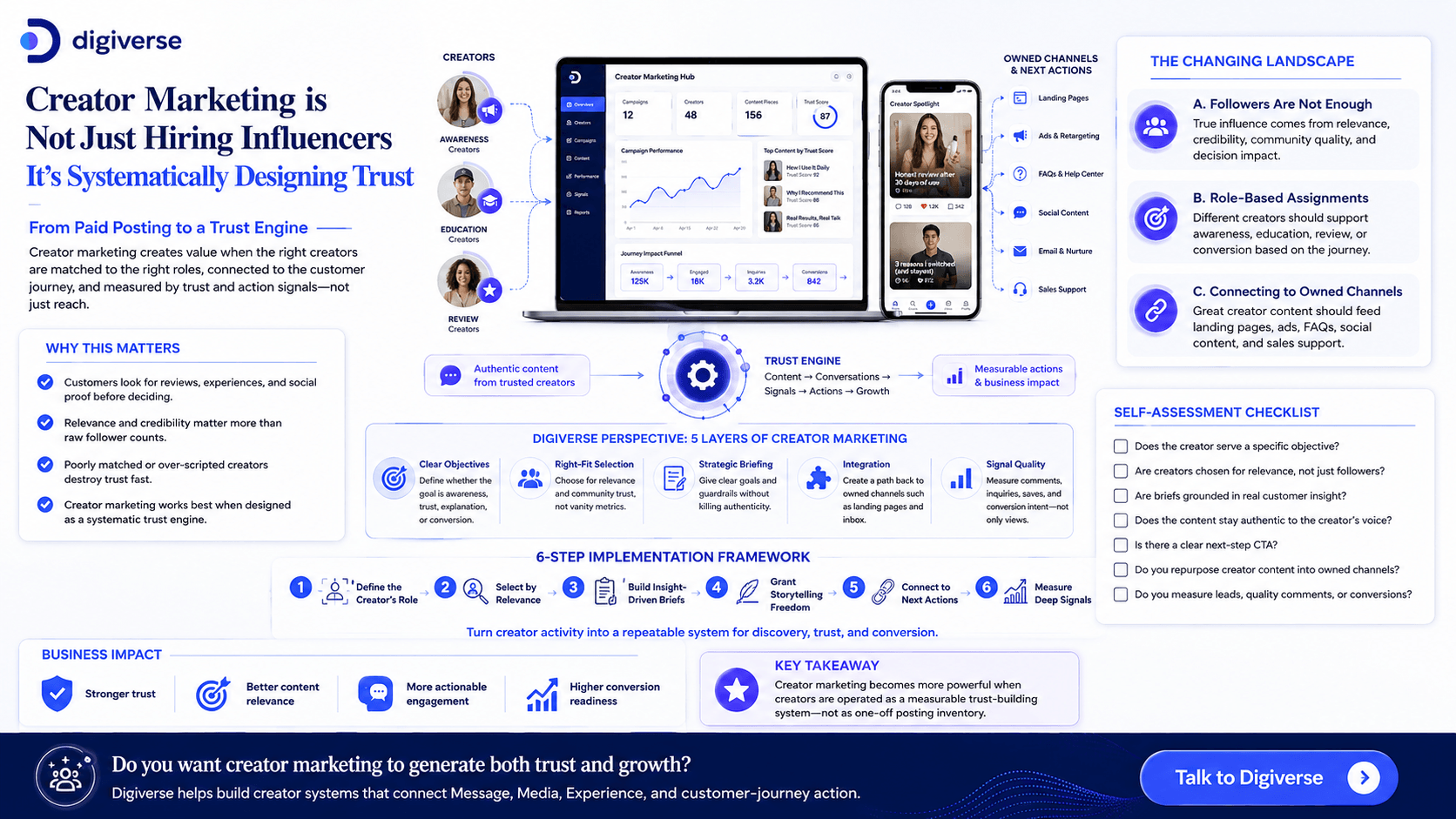
The Changing Landscape
- Followers Are Not Enough: A creator with a large following may not be relevant to your brand. True influence lies in relevance, credibility, community quality, and the ability to drive decisions. A micro-creator with a highly engaged, trusting community often outperforms an account with a massive, generic audience.
- Role-Based Assignments: Not every creator should perform the same task. Some are best at building awareness, others at explaining complex products, providing detailed reviews, or driving sales through live commerce. Assigning roles based on the customer journey is far more efficient than broad-brush booking.
- Connecting to Owned Channels: A great review shouldn’t stay on the creator’s page. Insights from these reviews can improve social media content, be embedded into landing pages, inform FAQs, support sales pitches, or be repurposed into high-converting ads.
Digiverse Perspective: The 5 Layers of Creator Marketing
- Clear Objectives: Is the creator here to build awareness, establish trust, explain products, or drive conversion?
- Right-Fit Selection: Choose based on relevance and community trust, not just vanity metrics.
- Strategic Briefing: Provide clear goals and brand constraints without stifling the creator’s natural voice.
- Integration: Ensure there is a path from the creator’s content back into the brand’s own ecosystem (landing pages, inbox, etc.).
- Signal Quality: Measure beyond views; look at quality comments, purchase inquiries, saves, and conversion signals.
Implementation Framework: 6 Steps to Systematic Creator Marketing
- Step 1: Define the Creator’s Role: Before searching for names, define the goal—are they helping with discovery, education, or transaction?
- Step 2: Selection Based on Relevance: Evaluate creators by their niche, content tone, credibility, and historical engagement quality.
- Step 3: Insight-Driven Briefs: Don’t just tell them what to post; explain the customer’s pain point, the brand’s desired perception, and the key proof points.
- Step 4: Grant Storytelling Freedom: If the content looks like a traditional ad, users will skip it. Let the creator share their personal journey and natural experience.
- Step 5: Connect to Next Actions: Every piece of creator content should lead to a clear “next step” (e.g., learn more, message a consultant, use a discount code, or save a tutorial).
- Step 6: Measure Deep Signals: Analyze comments, sales-related questions, traffic, usage of promo codes, and how the content impacted your owned media performance.
Implications for Businesses in Vietnam
In Vietnam, creator marketing is a powerhouse across TikTok, Facebook, YouTube, and Livestream commerce. Users are highly skeptical but eager to learn from trusted voices. Whether you are a B2B brand working with industry experts or a retail brand using KOCs to demonstrate real-life product usage, the key is to place the creator within the context of your overall content system and customer journey.
Self-Assessment Checklist
- [ ] Does the creator serve a specific objective?
- [ ] Are creators selected based on relevance rather than just follower counts?
- [ ] Are briefs grounded in actual customer insights?
- [ ] Does the content remain authentic to the creator’s voice?
- [ ] Is there a clear “call to action” connecting the content to your brand?
- [ ] Do you repurpose creator content for your owned channels?
- [ ] Do you measure leads, quality comments, or conversions?
If you answered “not sure” to many of these, your creator marketing may be just an ad-booking activity, not a systematic trust-building machine.