What is Digital Fragmentation?
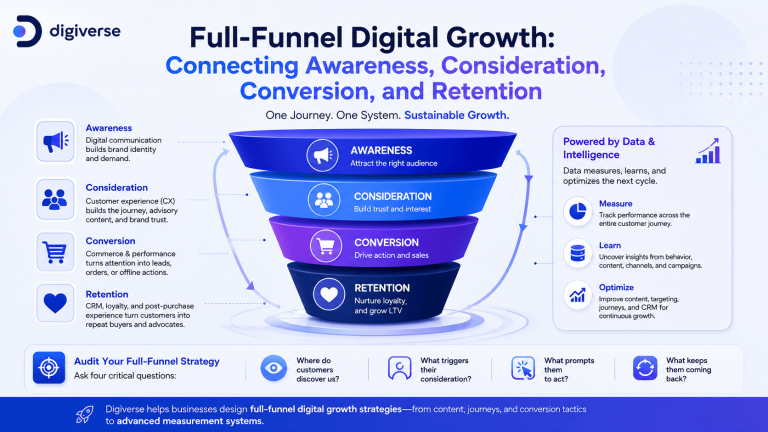
Digital fragmentation occurs when a business carries out numerous digital activities, but they do not operate as a cohesive system. Each team works in a silo, every channel pursues its own KPIs, and every tool holds a fraction of the data—without a clear, unifying thread connecting them. The result? The business stays busy—running campaigns, creating content, driving traffic, and generating reports—yet growth remains stagnant and unclear.
Sign 1: Campaigns are disconnected from CRM
A campaign may generate high engagement or leads, but customers are not nurtured afterward. Campaign data is neither segmented nor integrated into a customer journey, and there is no logic for follow-up. Once the campaign ends, the relationship with the audience terminates right along with it.
Sign 2: Content does not drive action
Your content might be visually appealing, consistent, and interactive, but its role in the customer journey is ill-defined. Which posts build awareness? Which ones establish trust? Which drive traffic to a landing page? Which support conversion? Without specific roles, content becomes a mere maintenance activity rather than a catalyst for growth.
Sign 3: Traffic fails to convert into business outcomes
Your website or landing pages receive traffic, but lead generation is low, sales are minimal, or form abandonment is high. This often signals that your messaging does not match user intent, CTAs are unclear, landing pages lack authority, or sales follow-up is not timely.
Sign 4: Data is abundant but actionable insights are missing
Dashboards are updated regularly and reports are filled with metrics, yet the team remains unsure of the next step. When data is used solely for reporting rather than intelligence, it remains dormant. A robust digital system must convert data into insights, insights into actions, and actions into learning.
Sign 5: Teams operate by tasks, not by journeys
Your Social team optimizes for engagement; the Ads team for cost; the CRM team for open rates; and the Sales team for closing deals. However, no one assumes responsibility for the entire customer journey. Consequently, customers often slip through the cracks at transition points without the business even realizing it.
The Digiverse Perspective
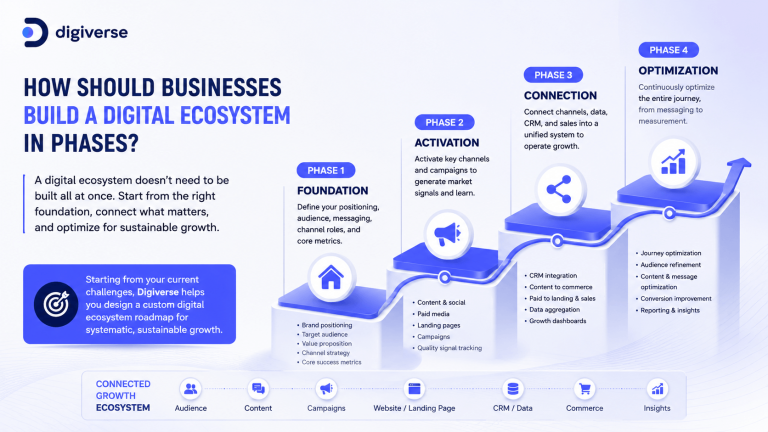
Fragmentation is rarely the fault of a single channel or team. It is usually the result of digital efforts growing faster than the company’s operating system. At Digiverse, we help businesses audit their current systems, identify points of failure, and redesign how digital components connect to drive meaningful growth.