Not every business needs to start with a complex system
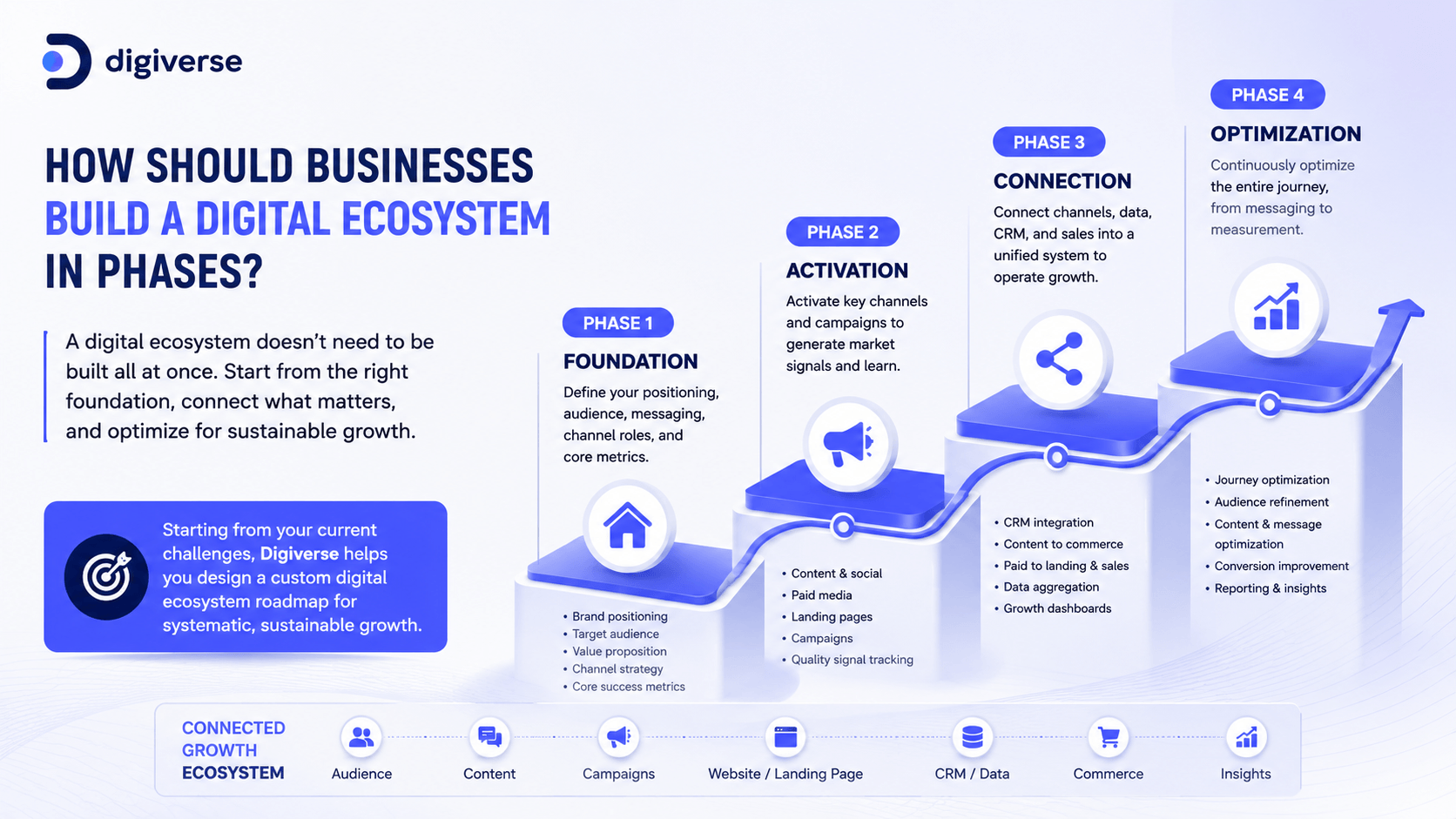
When hearing the term “digital ecosystem,” many businesses immediately think of a massive system involving countless tools, endless dashboards, and complex processes. In reality, a high-performing digital ecosystem should be built in phases, based on the company’s maturity level and current growth challenges. The key is not to do everything at once, but to know which layer to build first, which to connect later, and which to optimize once you have sufficient data.
Phase 1: Foundation
In the initial stage, businesses must clarify their digital positioning, target audience, messaging, channel roles, and basic measurement. This is your foundation. If the foundation is ill-defined, subsequent activities will likely become disjointed. The core questions are: How does the brand want to be perceived? Who is the target audience? What is the role of digital in our growth? And what are our primary success metrics?
Phase 2: Activation
Once the foundation is set, it is time to activate key channels: social content, campaigns, paid media, and websites or landing pages. The goal of this phase is to generate market signals—what messages resonate, which audience segments are interested, and which channels are effective? Activation shouldn’t just be measured by reach or traffic. It must also account for “quality signals” such as intent-based comments, lead quality, content saves/shares, landing page interactions, or inquiries.
Phase 3: Connection
As activities grow, the business needs to connect them. Campaigns must connect to the CRM; content must lead to commerce; paid media must connect to landing pages and sales follow-up; and data must be aggregated into dashboards that support decision-making. This is the stage where you transition from simply “doing digital” to “operating digital growth.”
Phase 4: Optimization
With a connected system in place, you begin continuous optimization. Optimization is not just about reducing ad costs; it’s about improving the entire customer journey, including messaging, audience targeting, content roles, conversion paths, CRM triggers, and reporting logic.
The Digiverse Perspective
Digiverse helps businesses build a digital ecosystem that matches their specific maturity level. Not every business needs complex martech immediately, but every business needs a clear connection roadmap to ensure their digital efforts don’t end up pulling in different directions.